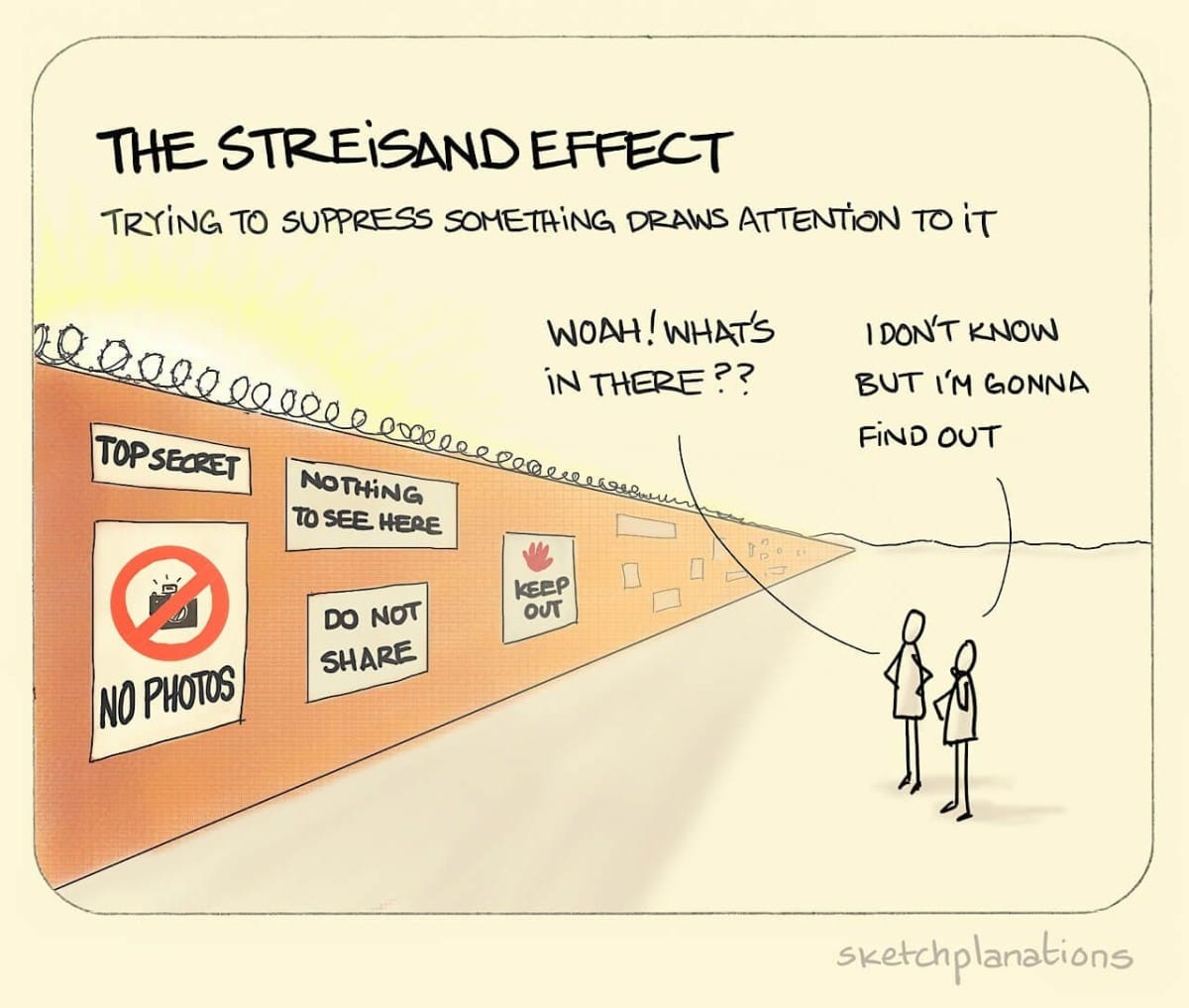
The Streisand Effect refers to the unintended consequence of attempting to suppress or censor information, where the effort backfires by increasing awareness and public interest in that information.
It is named after American singer and actress Barbra Streisand, whose attempt to suppress the California Coastal Records Project's photograph of her cliff-top residence in Malibu, California, taken to document California coastal erosion, inadvertently drew far greater attention to the previously obscure photograph in 2003.
There are plenty of examples of the Streisand effect in action.
Take the Union Street Guest House in New York, which implemented a policy warning guests that “a $500 fine will be deducted from your deposit for every negative review by anyone in your party.”
You can imagine what happened next. After the policy was shared online thousands of people took it upon themselves to post negative reviews of the establishment on Yelp and other review sites.
London taxi drivers felt the full force of the Streisand effect in the summer of 2014 when they held a protest against the ride-hailing app Uber.
Uber reported an 859% increase in downloads that week as millions of Londoners heard about the app for the first time.
Another example of the Streisand effect concerns Argyll and Bute Council, who attempted to stop nine-year-old Martha Payne from documenting her school lunches on her NeverSeconds blog, where she gave ratings and described their nutritional value.
The council’s heavy-handed tactics created a global news story and prompted a bigger conversation about the quality of school dinners.
The local authority soon backed down – and Martha used the publicity to raise over £130,000 to help the charity Mary’s Meals provide school meals to disadvantaged children in Africa.
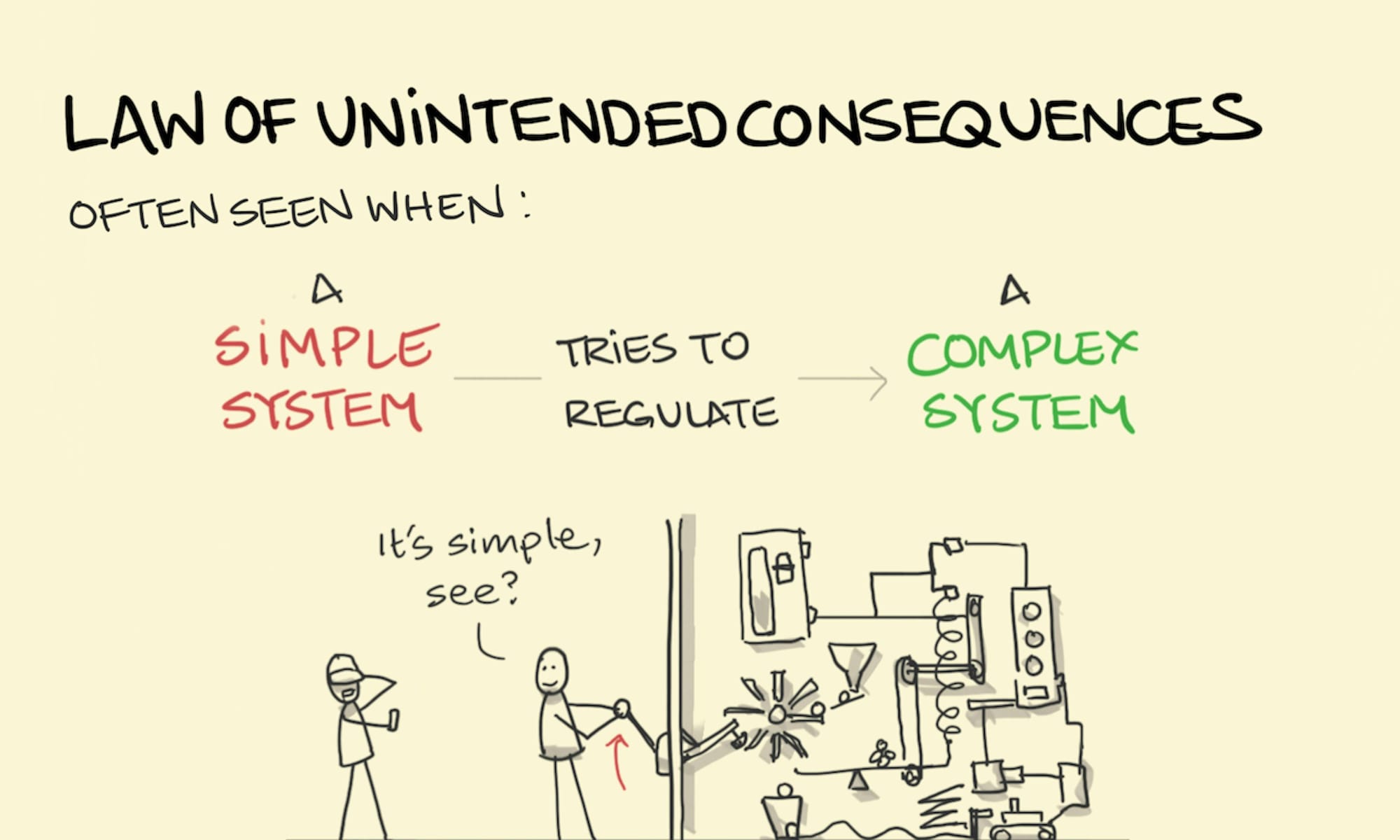
In digital design and content management, the Streisand Effect is a critical concept to consider when dealing with sensitive information. Attempts to hide or remove content can backfire, leading to more attention and potentially causing reputational damage.
Designers and digital strategists should anticipate how users might react to censorship attempts and carefully manage controversial content. Transparent communication strategies and proactive content management can help mitigate the risk of unwanted exposure.
For instance, in social media moderation, overzealous censorship of posts or comments can lead to backlash, drawing more attention to the information the platform intended to suppress. A more measured, transparent approach often yields better results.
Increases visibility: Attempts to censor or suppress information can lead to greater public awareness of that information.
Requires careful handling: Designers and digital strategists must be cautious with content removal strategies to avoid unintended consequences.
Transparency is key: Being open about content policies and practices can help prevent backlash and mitigate the Streisand Effect.
Resources