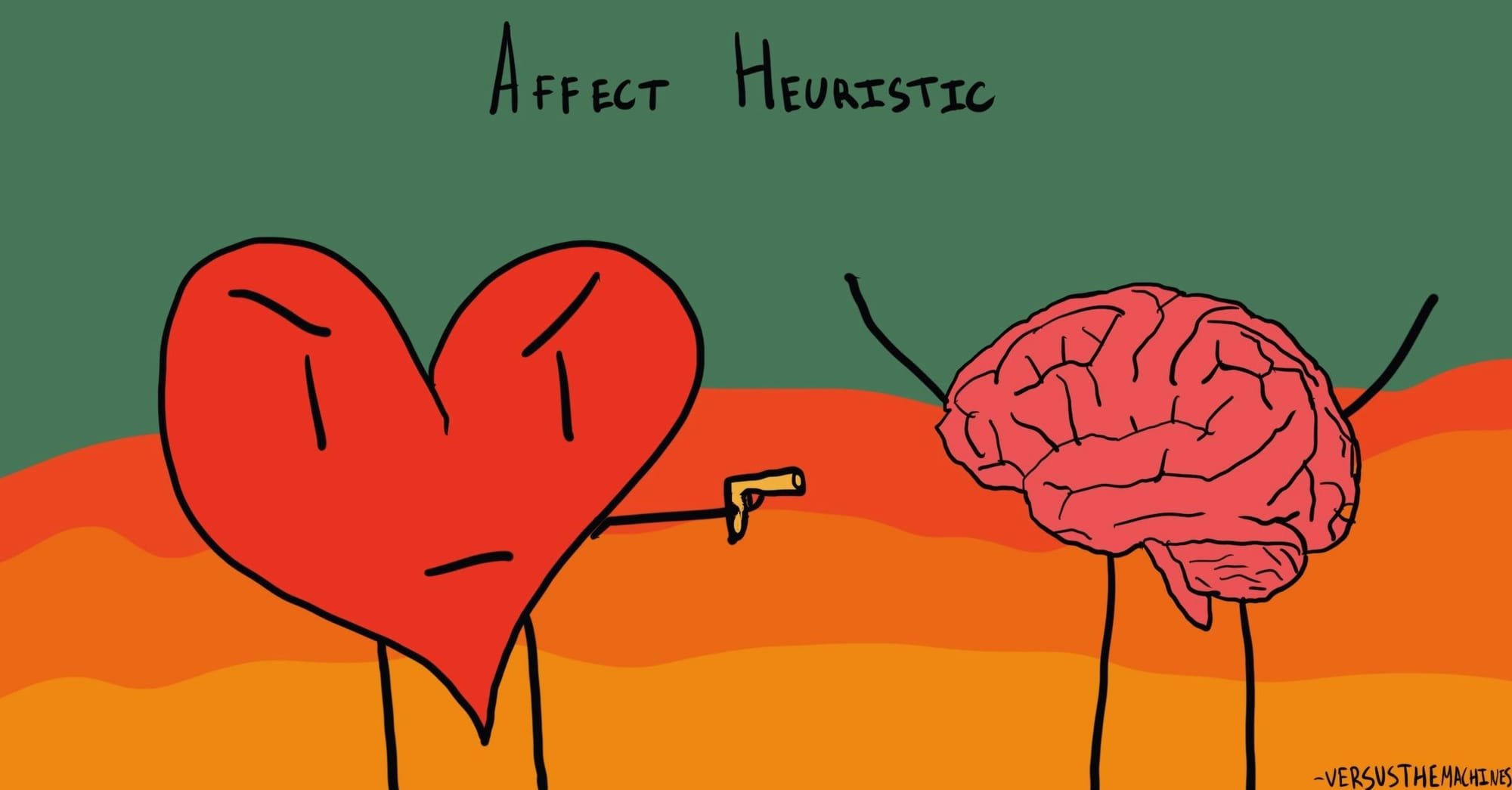
People's current emotions cloud and influence their judgment.
Affect Heuristic describes how we often rely on our emotions, rather than concrete information when making decisions. This allows us to conclude quickly and easily, but can also distort our thinking and lead us to make suboptimal choices.
This heuristic is a mental shortcut where we make decisions and judgments based on our current emotional state rather than through careful analysis. This cognitive mechanism suggests that immediate feelings about something - whether positive or negative - serve as a rapid way to evaluate situations and make choices. When we experience strong emotions, they act as a lens through which we perceive and judge everything around us.
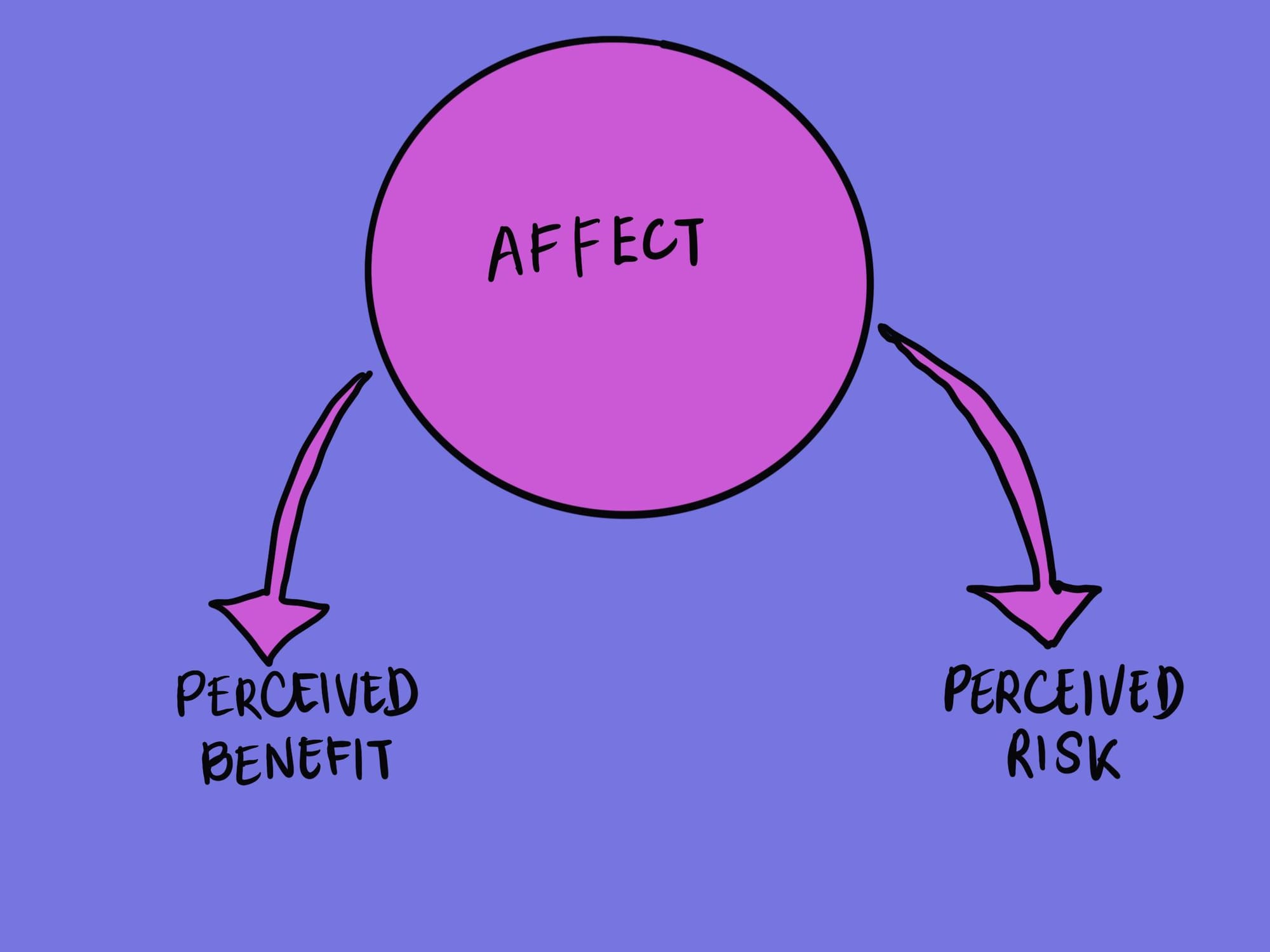
The phenomenon operates on both conscious and unconscious levels, influencing our perception of risks, benefits, and overall value. For instance, if we're in a positive emotional state, we tend to perceive lower risks and higher benefits in situations, while negative emotions lead to heightened risk perception and diminished appreciation of benefits. This emotional filtering happens automatically and can significantly impact our decision-making process before rational analysis even begins.
The affect heuristic can influence any decision but specifically comes into play in situations where there is significant time pressure. This means that if we need to make an important choice quickly, resorting to this heuristic may lead us in the wrong direction.
Furthermore, the affect heuristic can drastically limit our options. For instance, we may be unwilling to put ourselves out there because of some gut feeling that we won’t succeed. This could prevent us from stepping out of our comfort zone at times and doing so could lead to great success.
In design, the Affect Heuristic plays a crucial role in how users perceive products or interfaces. We must understand that users' emotional states significantly influence their experience with a product, often overriding logical considerations. This principle is particularly important in user experience design, where emotional engagement can make or break a user's relationship with a product.
The impact of affect on design extends beyond just user interaction - it influences brand perception, user loyalty, and overall product success. We need to consider not just the functional aspects of their design but also how it makes users feel, as these emotions will color all subsequent interactions and judgments about the product.
This understanding has led to the rise of emotional design principles, where creating positive emotional experiences becomes as important as ensuring functionality.
https://www.youtube.com/watch?v=V2EMuoM5IX4
Instagram's Design Evolution: Instagram consistently focuses on creating positive emotional experiences through its interface design, using pleasing animations and interactions that trigger positive effects, leading to increased user engagement.
Chimp Their playful design approach and friendly mascot (Freddie the Chimp) deliberately create positive emotional associations with what could otherwise be perceived as a mundane email marketing tool.
Headspace App: The meditation app uses calming colors, smooth animations, and friendly illustrations to create a positive emotional state before users even begin their meditation practice, enhancing the overall experience.